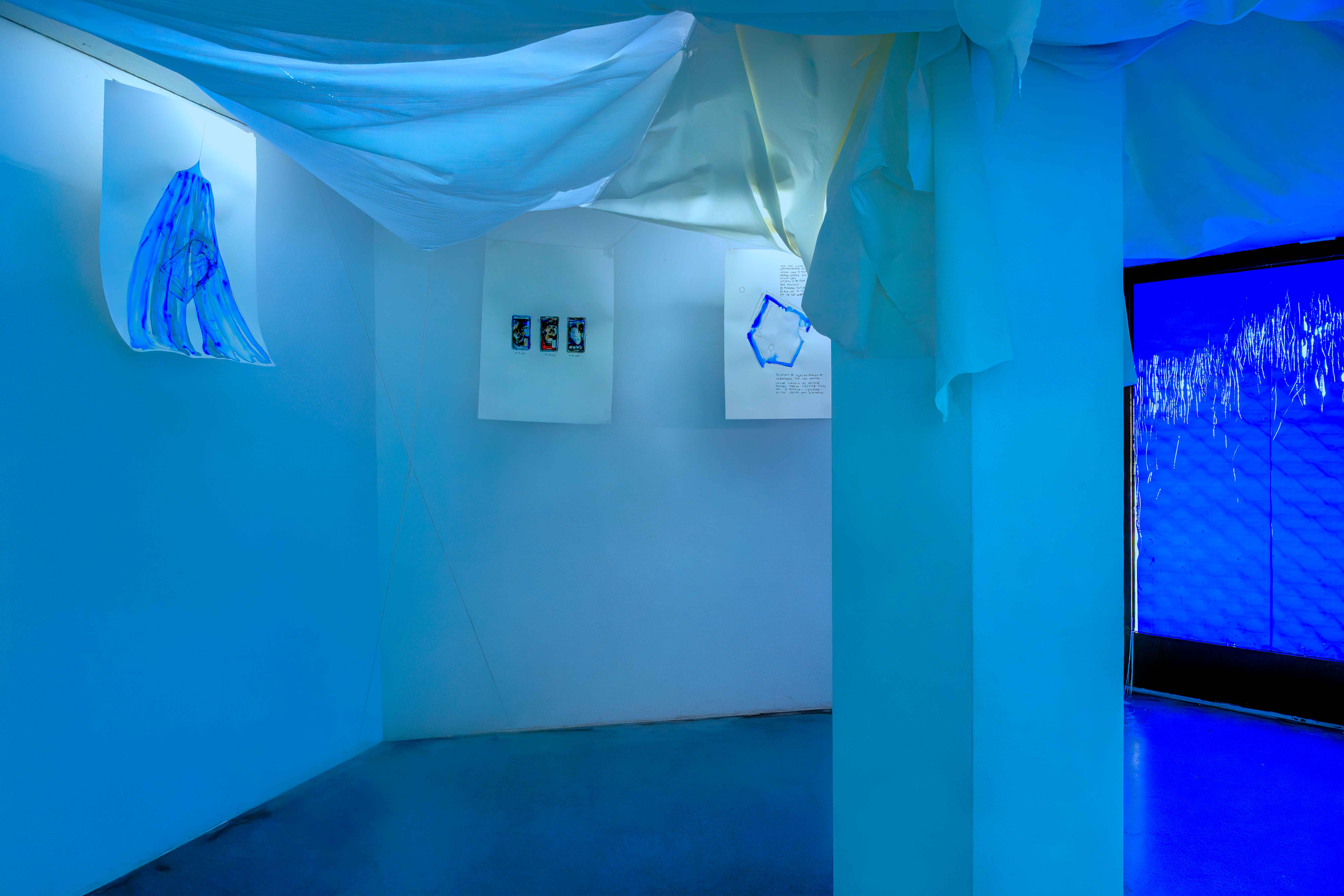
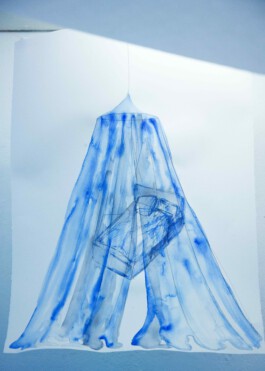
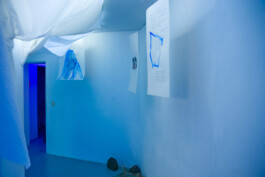
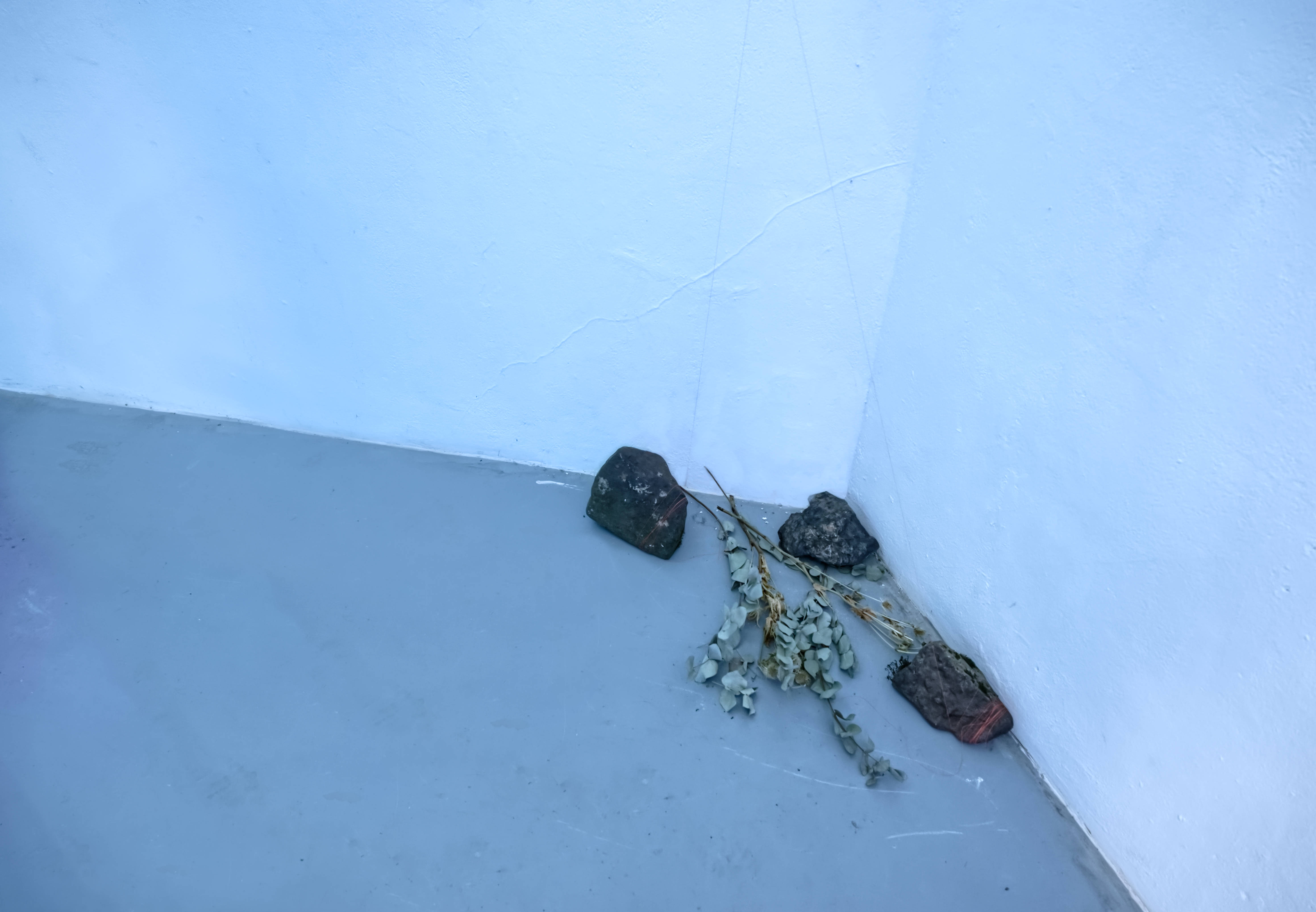
In the show SHIELDLESSNESS at Gemeinde Köln 2025, Daria Nazarenko team up with Moïse Daouda Fall, bringing their different backgrounds to their collaboration: Moïse Douda Fall dances krump and is interested in lighting and stage technology, while Daria Nazarenko, an interdisciplinary artist, explores subcultural community practices through performance. Their audiences come from two cultural spheres that can only be connected through their collaborative work. They seek alternative forms of collaboration between two continents, shaped by postcolonial histories and differing notions of equality. Together they explored the notion of unprotected collonial soil around Dakar and oral history guarded by the Griot families.


SHIELDING
Practices and conceptual approaches in which bodies, intentionally or involuntarily, become shields. Bodies take on an ambivalent and controversial status in the process: on the one hand, they serve as protection or as a buffer against others – other people or symbolic sites – and express resistance. On the other, they become weapons as well as shields when they intervene, on the ground as well as politically, in wars and conflict but also activism. Situated in a broader intellectual context, the focus on shielding connects to various debates in which corporeality and embodiment in current socio-political contexts are re-evaluated. It also follows the question of how body-based research from the performative arts can enter into dialogue with other fields of knowledge and application to help understand the aesthetic, sociopolitical, ethical and legal dimension of the body.
TEXT BY SANDRA NOETH AND JANEZ JANSA


With greatest thanks for their participation in the artistic research:
Ahmadou Sissokho, Famara Mané, Ousmane Sonko, Zarko, Elhadji babacar Faye, Alassane Sissokho
Photographed by Luisa Flügge


SIGMA Audiovisual Systems
ORAFOL
Li Germany
Jung Papier
Cultural Office of the City of Cologne

In the show SHIELDLESSNESS at Gemeinde Köln 2025, Daria Nazarenko team up with Moïse Daouda Fall, bringing their different backgrounds to their collaboration: Moïse Douda Fall dances krump and is interested in lighting and stage technology, while Daria Nazarenko, an interdisciplinary artist, explores subcultural community practices through performance. Their audiences come from two cultural spheres that can only be connected through their collaborative work. They seek alternative forms of collaboration between two continents, shaped by postcolonial histories and differing notions of equality. Together they explored the notion of unprotected collonial soil around Dakar and oral history guarded by the Griot families.


SHIELDING
Practices and conceptual approaches in which bodies, intentionally or involuntarily, become shields. Bodies take on an ambivalent and controversial status in the process: on the one hand, they serve as protection or as a buffer against others – other people or symbolic sites – and express resistance. On the other, they become weapons as well as shields when they intervene, on the ground as well as politically, in wars and conflict but also activism. Situated in a broader intellectual context, the focus on shielding connects to various debates in which corporeality and embodiment in current socio-political contexts are re-evaluated. It also follows the question of how body-based research from the performative arts can enter into dialogue with other fields of knowledge and application to help understand the aesthetic, sociopolitical, ethical and legal dimension of the body.
TEXT BY SANDRA NOETH AND JANEZ JANSA


With greatest thanks for their participation in the artistic research:
Ahmadou Sissokho, Famara Mané, Ousmane Sonko, Zarko, Elhadji babacar Faye, Alassane Sissokho
Photographed by Luisa Flügge


SIGMA Audiovisual Systems
ORAFOL
Li Germany
Jung Papier
Cultural Office of the City of Cologne